
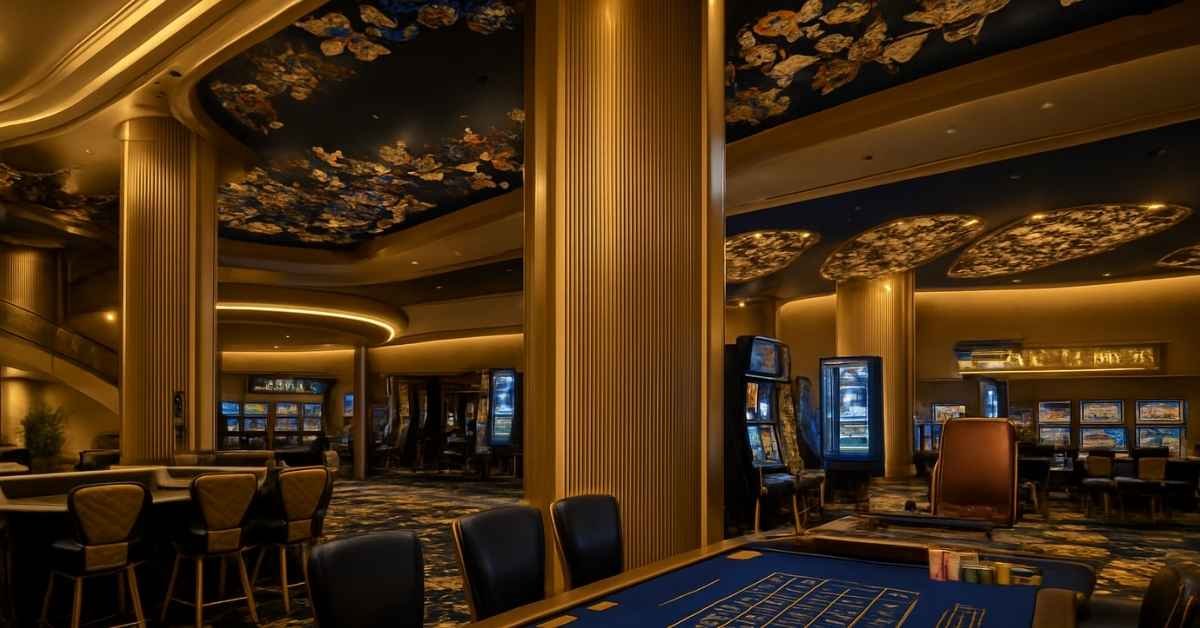
Walk a casino floor in Batumi or Kyrenia (Girne) and you’ll notice a pattern that used to be rare: some of your most consistent roulette and poker-derivative players are spending more time in front of slot banks.
Not all of them. Not overnight. And not always permanently. But the direction is real—driven less by “taste” and more by economics, speed, privacy, and operational design. When those factors line up, table players don’t need to “convert.” They simply drift.
A local reality check matters here: in Georgia and Northern Cyprus, Baccarat and Craps are not meaningful demand drivers. The table games that shape the floor are typically Single Zero Roulette, Russian Poker, Novo/Nova poker variants, and Ultimate Texas Hold’em. So when we talk about table-to-slot migration and its impact on casino floor efficiency in these regions, we’re talking about those specific players.
Punchy Definitions
Table-to-slot migration
A measurable shift where a player historically tracked as table-dominant begins generating a growing share of their theoretical win, active minutes, or coin-in from slot play.
Defining Casino Floor Efficiency
How effectively the floor converts space, labor, and time into stable gaming win—commonly viewed as win per square meter, win per labor hour, and variance stability. When players migrate to slots, casino floor efficiency typically rises due to lower labor costs and faster game speeds.
Speed advantage (slots)
Slots compress decision cycles: more resolved outcomes per hour, less waiting, fewer interruptions, and a stronger “progress per minute” feeling than most table games.
The Behavior That Most People Misread: “Cooling Down” on Slots After Roulette
Some players—especially roulette players—don’t migrate because they “prefer slots now.” They migrate because slots are a cool-down zone.
The sequence looks like this:
- Roulette session (high energy, public, fast swings)
- Player steps away to “reset the head”
- Machines for 10–40 minutes (private, frictionless, steady cadence)
- Player returns to roulette once emotions and rhythm stabilize
Slots become the decompression chamber between roulette bursts.
This matters because if you only look at totals, you might label the player as “moving to slots,” when in reality the player is simply extending their visit and managing volatility through product switching.
Operational tell: you’ll see roulette regulars whose play pattern is “roulette → machines → roulette,” often repeating that cycle multiple times per visit. The value of that behavior isn’t only the machine win—it’s that the machines keep the player on-property long enough to return to roulette instead of leaving.
How Table Player Drift Impacts Casino Floor Efficiency in Georgia and Northern Cyprus
1) Speed and fatigue
Roulette is fast—until it isn’t. A live wheel has bottlenecks: dealer rhythm, chip handling, payouts, crowding, disputes, and dead minutes between decisions. Poker derivatives introduce their own friction: decisions take longer, rules get interpreted, and players can feel watched.
Slots remove most of that. The player gets constant resolution, no waiting for other people, and no social friction. The result isn’t that the player “loves slots more.” It’s that the session becomes easier to sustain, heavily boosting overall casino floor efficiency.
Operational tell: rising time-on-device from customers you used to see mainly in pit ratings, especially during busy periods when table flow slows down.
2) Privacy (especially for locals and regional players)
Tables are the most visible way to gamble. Slots are the most discreet. A player can sit alone, face forward, blend into the crowd, and avoid unwanted recognition or conversation.
In markets where reputation and relationships travel fast, this is not a minor factor. It’s a major behavioral lever. Many players won’t tell you this directly. They’ll just change where they spend time.
Operational tell: mid-to-high worth players showing up in slot tracking while remaining inconsistent or unregistered in pit systems.
3) Lower friction to “just play”
Many table games require setup: choosing a seat, buying in, understanding minimums, and (for some players) feeling judged if playing small.
Slots are brutally simple: insert money, press start. That simplicity is not “casual.” It is frictionless—and frictionless products steal time. That’s why table players often “warm up” on slots—and why roulette players often cool down on slots after a swing-heavy run.
Operational tell: more visits where a roulette regular shows meaningful machine play between roulette sessions, not instead of them.
4) Inflation and bankroll psychology
When inflation bites, players become more protective of exposure and more sensitive to public loss. If table minimums rise, table play can feel like a forced commitment.
Slots offer a perception of control: denomination choice, bet ladder choice, micro-sessions, and “I can stop anytime” pacing. The math isn’t automatically better. The emotional exposure often feels lower.
Operational tell: more low-to-mid denom activity during periods where table minimums rise or table crowding pushes casual players off the game.
5) The “big win on small bet” effect
This is a practical driver you can see on real floors in these markets: modern linked progressives and feature-led product lines sell a simple promise—a life-changing hit without complex decisions.
The player doesn’t have to calculate, signal, or manage table etiquette. They can just press Start and let the product do what it was designed to do: produce frequent “events” with a visible jackpot ladder.
Packages like EGT Bell Link, APEX Clover Link Elements, and NOVOMATIC XTENSION LINK are highly effective at attracting table players who want excitement but don’t want friction. Even when a player doesn’t fully understand the math, they understand the headline: “I can bet small and still have a chance at something massive.”
Operational tell: table players concentrating on high-visibility progressive zones, often with repeated short bursts of play rather than one long grind.
6) Slot design learned from tables
Modern slots borrow table psychology: event moments, streak narratives, feature cadence, near misses and mechanics that create an illusion of control. Players who love the peak moment of roulette or the bonus drama of Nova Poker can get that cadence more often per hour on a well-designed slot bank through proper slot operations management.
Operational tell: table players gravitating to feature-rich banks placed near the pit, especially when those banks have visible communal energy.
7) Tables create more “trust-breaking moments”
Late-bet disputes, payout disputes, hand-evaluation arguments in poker derivatives, inconsistent dealer communication, and slow service at peak—this is enough to break trust.
Most players won’t complain. They’ll reduce table time and migrate toward the product that doesn’t argue back—or they’ll use machines as a cool-down buffer before returning to roulette.
Operational tell: stable or slowly declining table drop paired with declining repeat rate and session length, while slots increase in repeat visitation and sustained play.
How to Measure Migration Without Guessing
Player-level metrics (most useful)
Track these monthly:
-
Active minutes in pit vs machines
-
Trips with pit ratings vs trips with only slot play
-
Cross-play sequence: slots → tables or tables → slots
-
Cycle detection: roulette → machines → roulette within the same visit
Casino Floor Efficiency Metrics (for operations)
To truly gauge casino floor efficiency, look at how traffic moves across your layout:
-
Roulette occupancy vs slot occupancy at the same hours
-
Table wait time vs slot availability
-
Service cycle time at peak
-
Variance patterns: tables swing, slots smooth
-
Traffic flow: do players leave roulette and sit at nearby machines, then return?
That last one is where layout decisions quietly change revenue.
What Operators Should Do to Maximize Casino Floor Efficiency
1) Stop treating it as “slots vs tables”
Treat it as session design. Players stay where the experience feels smooth. When tables create friction, slots win by default.
2) Build “bridge zones” that support roulette cool-down and return
Place the right machine mix adjacent to roulette and the poker-derivative pit areas. Design objective: make it easy for a roulette player to step away, cool down, and return.
Bridge-zone mix that typically supports this best:
-
medium volatility + frequent feature cadence
-
visible bonus events and linked jackpot ladders
-
comfortable seating and strong beverage service
-
denomination ladder that feels “table-adjacent,” not penny-only
You’re not replacing the pit. You’re protecting it by giving it a buffer.
3) Reframe comps around cross-play (reward the cycle, not just the product)
If you reward table players only through pit logic, you lose them the moment their time shifts. Trigger offers from cross-play behavior such as “roulette → machines → roulette” patterns and reward the full visit.
4) Reduce table friction (unsexy fixes that work)
- tighten procedures on late bets and disputes
- standardize dealer communication (especially poker games)
- remove dead time from float/fills/operational pauses
- protect peak-hour experience with staffing and service loops
5) Audit minimums and side-bet complexity
Keep tables playable for the segment that wants table identity without table stress.
FAQ
Is table-to-slot migration real in Georgia and Northern Cyprus?
Yes as a directional behavior, especially on mixed floors where players can switch products without switching venues, and during periods where table friction increases.
Do roulette players actually migrate, or do they just take breaks on machines?
Both exist. Many roulette players use machines as a cool-down zone: roulette → machines → roulette. That behavior often increases total time on property and can protect roulette revenue by preventing early exits.
Why do linked progressives attract table players?
Because they offer a simple value proposition: big visible jackpot ladders, frequent “event” moments, and minimal decision-making.
What is the biggest driver of drift?
Friction. Slots are faster, more private, and less confrontational. When tables feel slow or produce trust-breaking moments, players drift.
Does this mean tables are dying?
No. Tables remain identity products and a VIP anchor. But time share can shift, which heavily impacts casino floor efficiency, staffing, and comp strategy decisions.
Conclusion
In Georgia and Northern Cyprus, the story isn’t “slots got cooler.” It’s operational: when a casino makes one part of the experience faster, quieter, and easier, intelligent players spend more time there.
For roulette players in particular, machines often serve as a cool-down zone that keeps them on property long enough to return to the wheel. Manage that deliberately and table-to-slot behavior becomes a profit stabilizer and a retention tool. Ignore it and it becomes silent leakage—first of table time, then of loyalty.